With the increasing popularity of mobile work, companies are seeking low-latency, compliant, and easy-to-manage remote work solutions. This article focuses on “how to achieve seamless switching between multiple devices using Thai cloud servers for remote desktop in the era of mobile work,” analyzing technical principles, network optimization, security, and deployment considerations to help decision-makers implement it quickly.
Why choose Thai cloud servers as a foundation for remote desktops
Select Thai Cloud Server Reasons include geographical proximity to Southeast Asian markets, the ability to reduce cross-border delays, and compliance with local regulations. For businesses with operations or customers in this region, Thai data centers can improve connectivity and access speeds, while also facilitating compliance with local data sovereignty and privacy regulations, thus ensuring stable operation in mobile work environments.
The principle behind seamless switching between multiple terminals via remote desktop
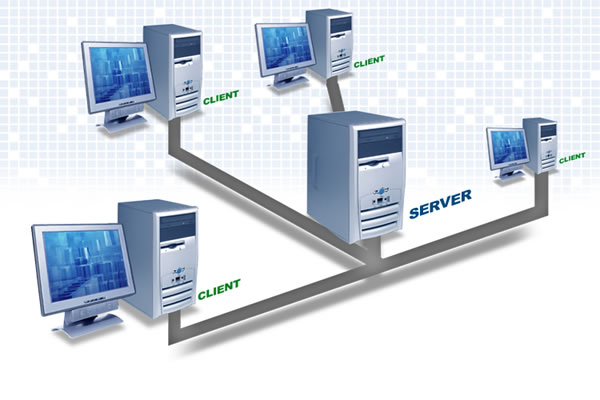
Remote desktop runs operating systems and applications in the cloud, with the client only transmitting images and input events, allowing for session switching between phones, tablets, and PCs. Session persistence, state synchronization, and protocol compression are key to achieving seamless switching, ensuring that users can quickly resume their work from any terminal.
Network latency and bandwidth optimization strategies
Seamless switching between multiple devices relies on low latency and stable bandwidth. It is recommended to use strategies such as proximity access, load balancing, and bandwidth guaranteeing, along with adaptive bitrate and compression at the protocol layer, to reduce the impact of jitter and packet loss on the user experience. For mobile network scenarios, breakpoint resumption and session reconnection mechanisms should be given priority support.
Key Points on Security and Compliance
When deploying remote desktop on Thai cloud servers, network isolation, TLS/SSH encryption, strong authentication, and the principle of least privilege should be implemented. Combine log auditing with intrusion detection to ensure traceability of access. And evaluate Thailand’s local data protection regulations to reasonably design data storage and cross-border transfer strategies in order to reduce compliance risks.
Key Points for Deployment and Configuration
During deployment, it is necessary to plan the instance specifications, storage I/O, and network outbound connections. Additionally, cloud hosts that support GPUs or high-performance computing should be selected to handle graph-intensive applications. For configuration, session persistence, load balancing, and auto-scaling should be enabled to ensure that response speed and stability are maintained even when the number of users fluctuates.
Client and mobile device configuration recommendations
To ensure a smooth multi-terminal switching experience, a lightweight display protocol, session synchronization, and local caching strategy should be implemented on the client side. Mobile versions should optimize bandwidth usage and touch adaptation, supporting background retention and quick reconnection. Regularly update the client to fix vulnerabilities and improve compatibility.
High availability, auto-scaling, and backup
A high-availability architecture includes deployment across availability zones, automatic failover, and resource redundancy. Auto-scaling can automatically scale up or down based on concurrent sessions, reducing the risk of peaks. Backup strategies must cover user configurations and important data, and recovery procedures should be regularly tested to ensure business continuity in case of failures.
Applicable Scenarios and Ops Recommendations
This solution is suitable for distributed teams, outsourced collaboration, and companies that need to serve Southeast Asian customers locally. For operations and maintenance, it is recommended to establish SLA monitoring, conduct regular security assessments and performance benchmarking, and optimize resource pools by considering costs and compliance requirements, to ensure a stable and scalable mobile work experience in the long term.

- Latest articles
- How To Enhance Data Recovery Capabilities Under German VPS Hosting Through Snapshots And Automatic Backups
- How To Choose An Alibaba Cloud Hong Kong Server VPS To Meet Multi-site Concurrent Access Needs
- Performance Testing Methods For South Korean CN2 Station Clusters: Key Points For Packet Loss Delay And Throughput Evaluation
- Performance Comparison Of The Hong Kong Sha Tin CN2 Host With Other CN2 Nodes On The Market
- Assessing The Speed Of VPS In Vietnam From A Business Perspective And Its Impact On E-commerce And Content Distribution
- In-depth Analysis Of Key Points For Selecting Taiwan CN2 Routes To Help Enterprises Select The Right Connection Channels
- Detailed Guide And Deployment Recommendations On How Corporate Websites And E-commerce Platforms Can Adapt To Hong Kong Server Hosting
- Developer's Guide: What Does Korean VPS Mean? Environment Configuration And Common Compatibility Issues
- Behind-the-scenes Interviews Curated The Charm Secrets Of Thai Variety Show Data Centers
- Key Points Reminder For Enterprise-Level Projects Choosing Singapore Cloud Server CN2 Service Providers
- Popular tags
-
Explore The Service Quality And Feedback Of VPS Thai Computer Rooms
This article discusses the service quality and user feedback of VPS Thai computer rooms, and provides you with reference to selecting suitable VPS services. -

Why Do Foreign Users Prefer Thai VPS Services
Discuss why foreign users prefer Thai VPS services and analyze their advantages such as cost-effectiveness, network speed, and technical support. -

How Cloud Servers Can Help The Online Development Of Local Thai Stores
This article discusses how cloud servers can help the online development of local Thai stores and enhance their e-commerce capabilities and market competitiveness.